Lesson 1 of 12 · 4 min
One question for the match
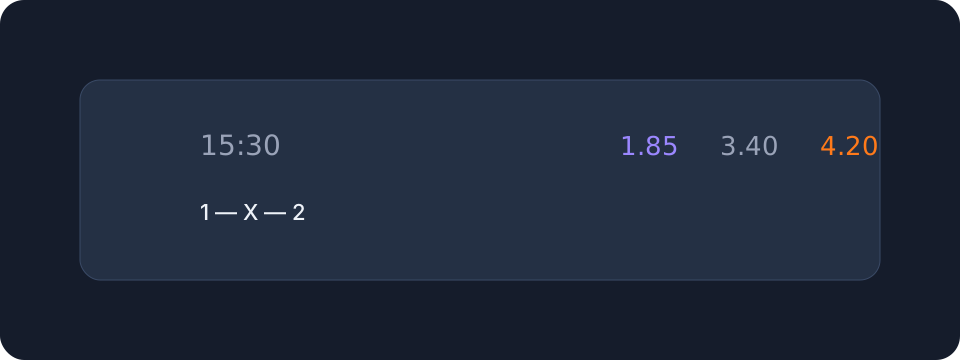
Analysing a match starts with a question, not with an xG table. The picture shows a match sheet. There is only one question: what exactly are you about to buy, and why should the price be wrong? "Who will win?" is not a question; it is a wish. The school has already covered markets and the betting line. Here football itself is the subject: home ground, line-ups, form and news. Without a single question, the news is just noise.
"One question for the match" in plain words
One question narrows down the list of markets. "Will the home side score more than 1.5 goals?" leads you to the home team total over. "Will the game open up after the 60th minute?" leads to an in-play plan, not to a pre-match bet on a home win. "Who looks stronger in the preview paragraph?" leads nowhere. The bookmaker has already read that preview. Your edge is a narrow point that, in your view, the price has smudged.
How it works
Before you open any websites, write down the question and a rough p (your estimated probability). Only then look at form, line-ups and the fixture list. If the question dies once you see the facts, you skip the match, and that counts as a success. If the facts you are reading have nothing to do with the question, you are simply reading about sport, not preparing a bet slip. A bet slip is allowed never to be created. The Bonulist match centre shows fixtures and scores, not a "bet of the day".
- Write the question in one sentence.
- Write a rough p.
- Gather facts that relate only to the question.
- Place the bet or skip.
Example with numbers
A match between two mid-table sides. The question: "Will there be few goals, because both teams sit deep with ten men behind the ball?" Your rough p for under 2.5 goals is 55%. Then you see that both teams have an xG of about 1.4, and both have gone under 2.5 in 4 of their last 6 home or away games, so the question is still alive. Another evening: no question is written down, and a home win is opened "because they are at home". That is not analysis. That is a click.
| Starting point | School approach | Noise |
|---|---|---|
| Question + p | yes | no |
| Preview "who looks better" | no | yes |
| Market list with 40 markets | after the question | instead of the question |
Common mistakes
- Starting with the full list of markets.
- Putting two questions on one bet slip.
- Changing the question after yesterday's loss.
- Confusing your interest in the match as a fan with your interest in it as a contract.
What to write in your diary
Question / p / alive or dead. One line, written before you click.
markets / listing, value. Next: home ground.
18+ only. This is a lesson, not a tip or a call to bet. Bonulist is an editorial guide to licensed bookmakers; we do not take bets.